A Simple Guide to Regular Investing
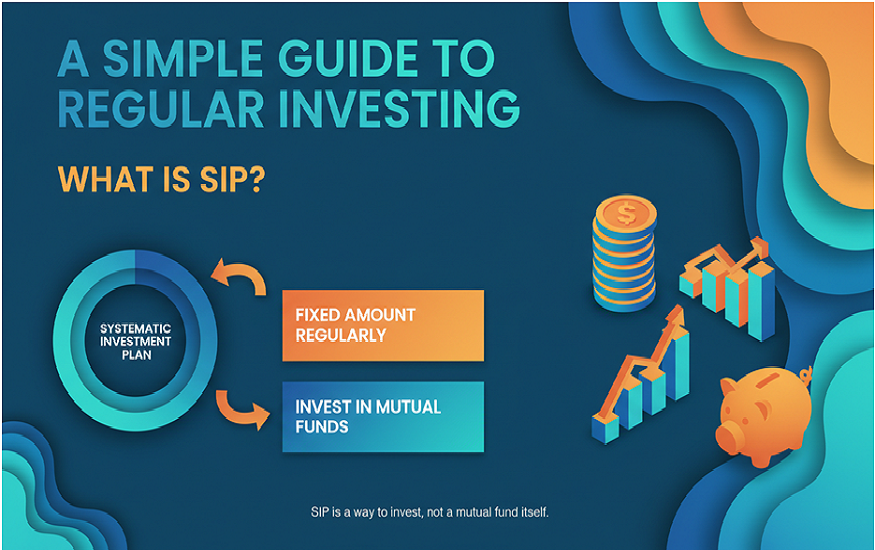
If you are new to the world of mutual funds, you might have heard about SIP, but you might not have a clear picture of what it actually is and how it works.
This guide explains what is sip and how it works in a simple, easy-to-understand way.
What is SIP.
First the basics: what is sip and how it works together answer the two most common questions beginners have.
SIP is an acronym for Systematic Investment Plan. It is a method of investing a fixed sum of money in a mutual fund scheme at regular intervals such as monthly or quarterly rather than investing a big sum of money at one go.
SIP is not a mutual fund, but it is a way of investing in mutual funds. The type of plan you choose determines where your money goes and how it can grow over time.
How SIP Operates in Practice
So, to the second part of the question, how does it work?
1. Select a mutual fund scheme based on your goal & risk comfort.
2. Decide on the amount, frequency, and start date of your SIP.
3. Your KYC is done, and you have created an auto debit mandate with the bank.
4. A fixed amount is invested on each of the scheduled dates and units are allotted at the prevailing NAV of the scheme.
5. The process will automatically repeat at the frequency you have selected.
Units are bought in installments at different NAV’s. Low NAV means more units for the same money, while high NAV means fewer units.
This can average out your purchase cost over a period of time – called the rupee cost averaging principle.
This can help average out your purchase cost over time, which is a principle known as rupee cost averaging.
Read More: NSDL IPO A New Era for India’s Capital Market Infrastructure
Summary
SIP is an investment process where you invest a fixed amount of money at regular intervals.
It is a mutual fund scheme in which a fixed amount is invested on a regular basis.
Each instalment is invested at the day’s NAV and your investment grows over a period of time as per your chosen time horizon.
An Example To Show This
Say you invest ₹5,000 every month via a SIP.
For an NAV of ₹40, you get 125 units in a month.
In a month when the NAV moves up to Rs50, you get 100 units for the same Rs5,000.
“Depending on the movement of the market, your average cost of purchase may be less than the simple average of NAVs over several months.
“This does not guaranty a profit.
What this means to you
SIP returns are linked to the market, so the value of your investment may increase or decrease based on the performance of the scheme selected by you.
The rate of interest is not fixed, unlike a recurring deposit.
What SIP does offer is a systematic and low-effort way to stay invested over the long term without having to make repeated investment decisions.
Read More: The Hidden Advantages of Choosing a Member-Owned Financial Institution
Look Closer At The Details
To find out more, including SIP types, benefits and suitability, visit our comprehensive SIP Guide which takes you through each stage in detail.
Try It Yourself »
Use the SIP Calculator to get an illustrative estimate of how your own SIP amount and duration could add up.
Final thoughts
Knowing what SIP is and how it works will put you in a better position to start investing with more confidence and clarity.
This simple guide is brought to you by Tata Mutual Fund.
Investment in Mutual Funds is subject to market risk. Please read all scheme documents carefully.