Why Apple Enterprise Solutions Are Transforming Modern Workplaces in 2026
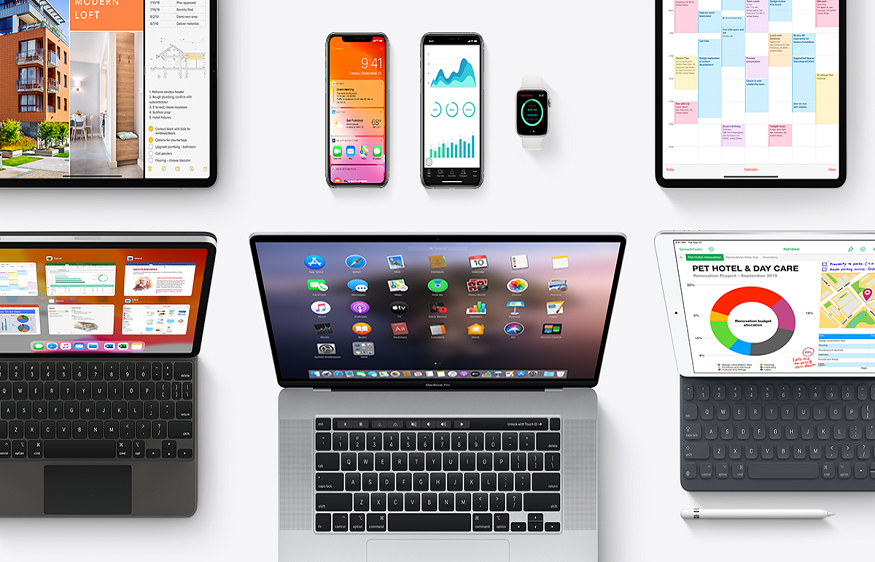
The way businesses operate has shifted considerably over the past few years. Offices are no longer the only place where work happens, and IT teams are no longer solely responsible for managing this change. In this gap, Apple Enterprise Solutions has emerged as a leader with a unique offering that many competing approaches struggle to match: an integrated, manageable, and user-friendly technology environment that benefits both employees and the company.
This combination is more valuable than it may seem, and it’s a major reason why more and more companies are embracing Apple as the foundation of their workplace technology strategy in 2026.
The Shift Is About More Than Hardware
While it’s easy to focus on the devices themselves, such as MacBooks, iPads, and iPhones, the real transformation happening in enterprise environments runs deeper than just the hardware.
Read More : Choosing the Right Digital PR Firm for Your Business
Apple’s strength lies in its ability to seamlessly integrate devices, identities, security measures, app management, and deployment processes. When these elements work together, IT teams spend less time troubleshooting and more time focusing on tasks that drive the business forward.
Employees get tools that don’t fight them. And companies get a technology foundation that scales without proportionally increasing the overhead costs. Employees also benefit from having tools that don’t impede their productivity, while companies gain a technology foundation that can scale without significantly increasing overhead costs. overhead required to run it.
That’s the actual shift. Not a preference for aesthetics, but a structural change in how enterprise technology gets built and managed.
Security Has Changed the Conversation
In the past, discussions surrounding Apple’s compatibility in enterprise environments often revolved around doubts regarding its ability to integrate with existing infrastructure and be effectively managed at scale.
However, these concerns have been addressed as Apple’s security architecture continues to evolve. With features such as secure boot, hardware-level encryption, biometric authentication, app sandboxing, and regular OS updates built into the platform, rather than being added on externally, Apple has become one of the most trusted foundations in enterprise IT.
For organizations managing distributed teams across multiple locations, this is a significant advantage. With devices connecting from different networks and locations, Apple’s built-in security measures significantly reduce the potential for exposure without requiring employees to adjust their work habits.
Enterprise Apple Deployment is More Manageable
One of the most practical changes seen in 2026 is the structured deployment process that has become available. With the use of Apple Business Manager and compatible MDM platforms, organizations can now configure and distribute devices remotely, with a level of precision that was not easily achievable a few years ago. This has greatly improved the efficiency and effectiveness of Enterprise Apple deployment.
A device ships to a new hire fully configured. Applications, policies, access controls, and security settings are applied automatically before the employee even powers the machine on. The IT team sets this up once and scales it across hundreds or thousands of devices without a proportional increase in effort.
This is what zero-touch deployment actually looks like in practice. It’s not a marketing phrase. For companies onboarding staff across Bengaluru, Chennai, Pune, and Mumbai simultaneously, it means the experience is consistent regardless of geography, and IT isn’t the bottleneck.
The Employee Experience Argument Is Now an Operational One
There’s been a tendency to treat employee satisfaction with technology as a soft concern, separate from operational performance. That distinction is harder to maintain now.
Slow devices create delays. Unreliable video calls create friction in hybrid meetings. Hardware that struggles under sustained load costs time across creative, analytical, and development workflows. When these things happen repeatedly, they affect output in ways that are real even if they’re difficult to measure precisely.
Apple’s chip architecture handles sustained performance differently. Devices don’t malfunction significantly under load, battery life holds across a full working day, and the consistency across devices means someone moving from iPhone to iPad to Mac doesn’t lose continuity in their workflow. These aren’t small things when multiplied across a workforce of thousands.
Apple Business Technology Solutions in Practice
The broader value of Apple business technology solutions becomes clear when you look at the full lifecycle rather than just the purchase. The upfront cost of Apple devices is higher. The upfront cost of Apple devices is indeed higher, but organizations evaluating the total cost of ownership over a three to five-year period often find that the overall cost is lower. This is due to factors such as reduced IT support tickets, longer device lifespan, free operating system updates, and a stronger resale value at the end of the device’s life.
For finance teams that have historically been hesitant about Apple due to its higher upfront cost, this shift in perspective towards considering the total cost of ownership has started to change the conversation. The initial cost may be higher, but when accounting for factors such as structured fleet management and planned refresh cycles, Apple devices often end up being a more cost-effective option.
Where Partners Add Real Value
Choosing Apple is just the beginning. Managing a large, distributed company with Apple devices requires proper support from knowledgeable partners.
Businesses that thrive with Apple often work with authorized partners who have a deep understanding of the technical ecosystem and the daily challenges of running a widespread deployment. The right partner handles everything from procurement to device setup, MDM configuration, staff training, and refresh cycles as a cohesive program rather than a series of disjointed tasks.
Read More : The Business Benefits of Custom Coaster Printing in a Competitive Market
Partnering with an Apple-focused company that has dedicated enterprise divisions and a strong presence in various regions in India can provide the technical expertise and reach necessary for successful large-scale deployments.
The transformation Apple brings to modern workplaces is not a coincidence. Their platform is designed to work efficiently at scale, and with the right partners managing the deployment, it can truly thrive.